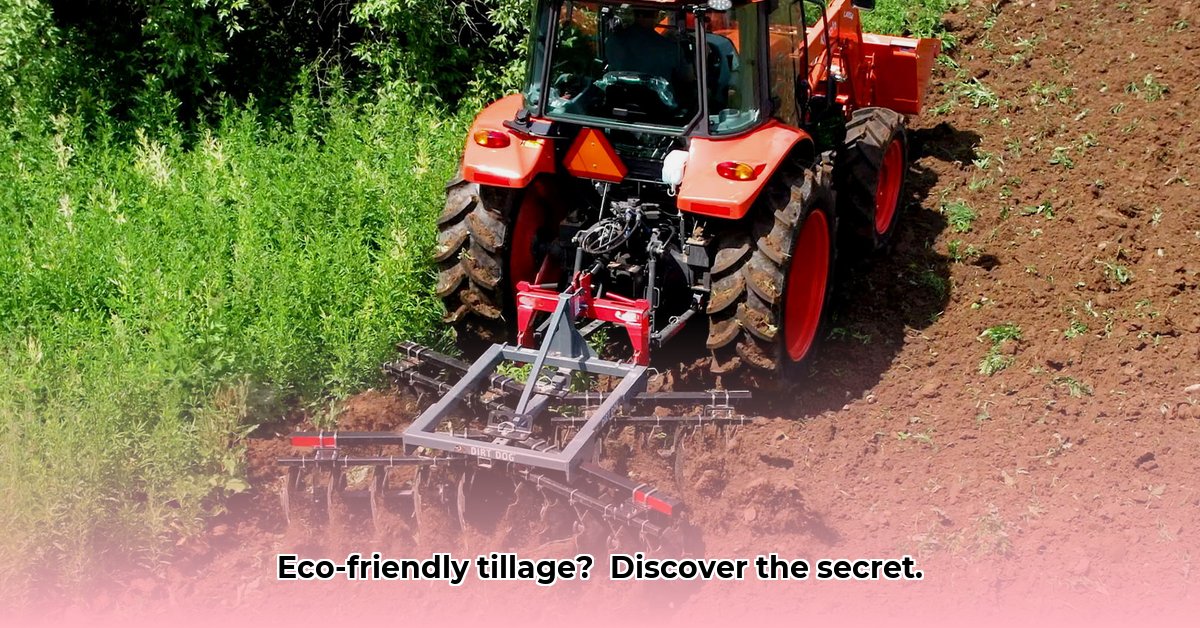
Choosing the right tools for your farm is crucial, especially when aiming for sustainable practices. This guide focuses on a common piece of equipment: the disc harrow (also known as a disc for tractor). We'll explore how to use this tool efficiently and responsibly while protecting your soil's health, balancing productivity with environmental stewardship. For more on tractor implements, check out this helpful resource on tractor implements.
Understanding Disc Harrows: Your Tillage Partner
Imagine a giant, rotating rake designed to break up and smooth the soil. That's essentially what a disc harrow does. It's a tillage implement used to prepare seedbeds by breaking up clods, leveling the soil surface, and incorporating crop residue. Several types exist, each suited to different needs and soil conditions:
- Tandem Disc Harrows: These feature two rows of spinning discs working in tandem, providing wide coverage, ideal for large-scale operations.
- Offset Disc Harrows: Offering greater maneuverability in tight spaces or around obstacles, they're a good choice for smaller farms or fields with irregular shapes.
- Pull-Type Disc Harrows: Simpler and less expensive, these are suitable for smaller farms or those with limited budgets.
The choice depends on your unique farm conditions: soil type, the crops you grow, and your overall goals. Heavy, clay-like soil might need a more forceful approach than lighter, sandier soil. Choosing the wrong tool can lead to unnecessary soil disturbance and potentially harm your crops. Isn't it crucial to get this right from the start, for both yield and sustainability?
Disc Harrows and Sustainable Agriculture: A Delicate Balance
Sustainable farming aims to build healthy soil and protect the environment. Tillage, while necessary, disrupts the soil, potentially leading to increased erosion and reduced water retention. The goal is to find a balance between preparing land for planting and safeguarding the soil's long-term health.
Traditional, intensive tillage can lead to significant problems. Soil erosion increases, and the crucial organic matter in the soil is reduced. No-till farming, conversely, leaves crop residue on the soil surface, promoting soil structure and water retention. Reduced tillage offers a middle ground, employing lighter tillage or fewer passes to minimize soil disturbance. Each approach has its pros and cons, demanding a careful evaluation of your specific circumstances. Soil type, crops, and budget all factor into the decision. What's the most effective approach for your farm?
Choosing a Sustainable Disc Harrow: Durability, Efficiency, and Design
Buying a disc harrow is a long-term investment; sustainability should guide your decision. A durable implement will last longer, minimizing replacements and waste. Look for sturdy construction using high-quality materials. A well-built machine will withstand years of use, reducing your long-term environmental footprint. Energy efficiency is another key factor. A well-designed disc harrow will need less tractor power, translating to lower fuel consumption and fewer greenhouse gas emissions. This directly affects both your costs and your environmental responsibility.
Here's a comparison to guide your selection:
| Feature | Sustainable Choice | Less Sustainable Choice |
|---|---|---|
| Construction | Heavy-duty steel; consider recycled or repurposed materials | Lightweight steel; quickly wears out |
| Disc Size/Spacing | Optimized for your soil, minimizing unnecessary tilling | Large discs, close spacing leading to excessive tilling |
| Maintenance | Easy access for cleaning, sharpening, and lubrication | Difficult maintenance, prone to premature wear |
Sustainable Disc Harrow Usage: Best Practices for Eco-Friendly Tillage
Using a disc harrow effectively and sustainably involves more than just attaching it to your tractor. These steps minimize environmental impact while ensuring optimal soil preparation:
- Meticulous Field Preparation: Leveling the field before using the disc harrow prevents unnecessary passes and reduces fuel consumption.
- Precise Disc Adjustment: Correctly adjust the depth and angle of the discs for your specific soil type. Too shallow, and you won't achieve proper soil preparation. Too deep, increases erosion risk.
- Strategic Timing: Avoid tilling when the soil is too wet (compaction) or too dry (erosion).
- Integrating Cover Crops: Cover crops protect the soil from erosion, improve soil health, and often reduce the need for extensive tillage.
Maintenance for a Longer-Lasting Disc Harrow: Investing in Longevity
Regular maintenance is key. A well-maintained disc harrow works more efficiently, lasts longer, and reduces the need for replacements.
- Sharpening: Dull discs create more compaction and require more effort, leading to wasted fuel. Regular sharpening is essential.
- Lubrication: Keep moving parts well-lubricated to reduce wear and tear.
- Regular Inspections: After each use, thoroughly inspect for any damage. Addressing small issues prevents larger problems.
Conclusion: Disc Harrows as Part of a Holistic Approach
Soil health is fundamental to sustainable agriculture. While the disc harrow is a valuable tool, it's just one component of a broader system. Implement tillage practices strategically as part of a holistic approach to land management, considering no-till or reduced tillage methods alongside cover cropping. Remember, a sustainable farm is built on a foundation of long-term soil health and responsible resource management.